In many global cultures, the casual invitation to “have a drink” typically implies a meeting over alcohol or perhaps a quick coffee. However, in Turkey, this phrase almost exclusively refers to a steaming, amber-colored glass of tea. Understanding Turkish Tea Culture is the fundamental key to unlocking the true essence of Turkish hospitality and social dynamics. From the busiest government offices in Ankara to the most remote mountain villages in the Pontic Alps, the rhythmic clinking of a small spoon against a glass serves as the heartbeat of the nation. It is not merely a beverage; it is a ritual of presence and a symbol of unconditional welcome.
More Than a Drink: The Symbolism of Connection
To the uninitiated, the sheer volume of tea consumed in Turkey can be staggering. Turkey consistently ranks as one of the highest tea-consuming nations per capita in the world. But to understand why, one must look past the caffeine content. Tea in Turkey is a social contract. When a host offers you a glass, they are not just quenching your thirst; they are offering you their time.
In the fast-paced modern world, tea acts as a mandatory “pause” button. You cannot rush a glass of Turkish tea. It is served at a temperature that demands patience, served in a vessel that requires careful handling, and brewed in a way that cannot be hurried. This inherent slowness is the backbone of Turkish Tea Culture, signaling to the guest that they are valued more than the schedule of the day.
The Iconic Vessel: The “İnce Belli” Glass
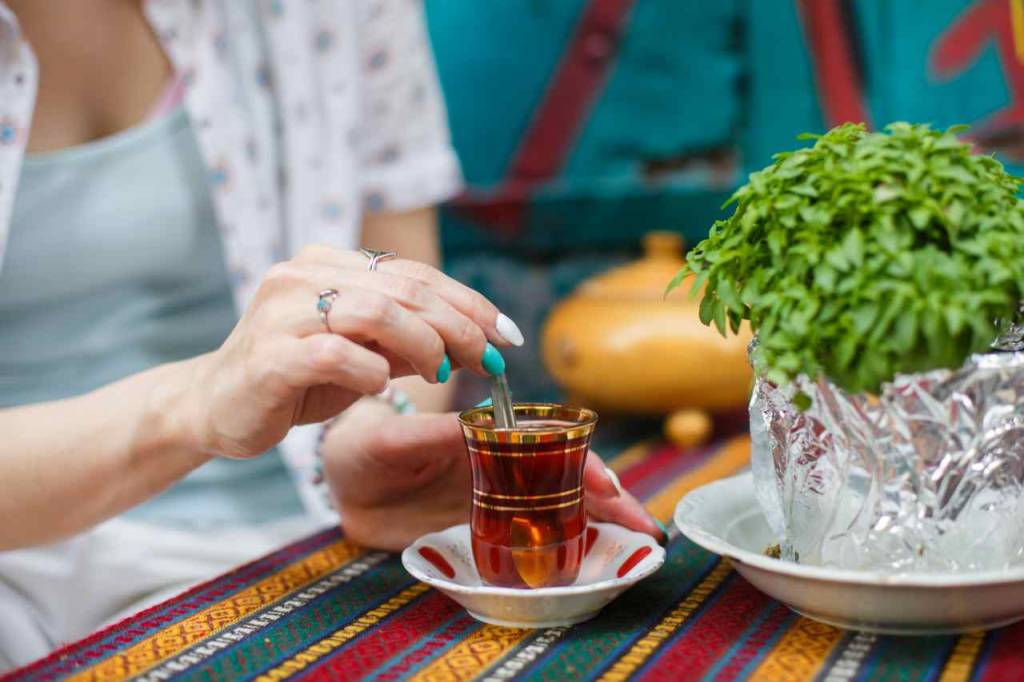
Turkish tea is never, under any circumstances, served in a ceramic mug or a heavy glass. It is exclusively served in a small, tulip-shaped glass known as ince belli (thin-waisted). While the aesthetic beauty of the glass is undeniable, its design is a masterclass in functional engineering:
Visual Perfection: The transparency of the glass allows the drinker to appreciate the “Tavşan Kanı” (rabbit’s blood) color. In the Turkish tea lexicon, this deep, clear, reddish-brown hue is the gold standard of a perfect brew. Anything lighter is considered weak (açık), and anything darker might be seen as bitter or over-steeped.
Thermal Regulation: The narrow “waist” of the glass serves a dual purpose. It helps retain the heat at the bottom of the glass while the flared rim allows the top layer to cool just enough for a comfortable sip. Furthermore, because there is no handle, you must hold the glass by the rim, which naturally prevents you from taking a gulp of scalding liquid.
The Art of the Brew: The “Çaydanlık” System
Turkish tea isn’t simply “made” by dropping a bag into hot water; it is meticulously “brewed” using a specific two-story teapot called a çaydanlık. This system is essential for achieving the perfect balance of flavor and strength.
The bottom, larger pot contains pure boiling water. The top, smaller pot contains the concentrated tea leaves, which are dampened and then steamed by the rising heat from below. This process allows for a slow extraction of flavor without burning the leaves. The beauty of the çaydanlık is that it allows for total personalization. The host pours a portion of the concentrate (dem) from the top pot and dilutes it with boiling water from the bottom pot, tailoring each glass to the guest’s preference—whether they prefer it koyu (strong and dark) or açık (light).
Tea as the Language of the Marketplace
If you walk into a carpet shop in the Grand Bazaar or a small carpenter’s workshop in a side street, the first thing you will hear is not a sales pitch, but the question: “Would you like some tea?” In the context of the Turkish marketplace, accepting this tea is a crucial cultural requirement.
It is the “pre-negotiation” phase. By sitting down and holding that warm glass, you are signaling that you are willing to engage, to talk, and to build a human relationship before any business is discussed. To decline tea without a valid reason can sometimes be seen as a slight, suggesting that you are in too much of a hurry for human connection. If you are truly at your limit, the polite response is, “Teşekkür ederim, sonra inşallah” (Thank you, later, God willing).
The Ritual of the Never-Ending Refill
In a Turkish home, hospitality is measured by the fullness of the tea glass. A host will often refill your glass the moment you reach the final sip, sometimes without even asking. This is a silent sign of abundance and generosity.
However, for foreigners, this can lead to an unintended “tea marathon.” To gracefully signal that you have reached your limit, there is a secret cultural code: place your small teaspoon horizontally across the top of the glass. This universal Turkish signal tells the host, “I am satisfied, and your hospitality was perfect,” without the need for a verbal refusal that might feel awkward.
The Social Heart: The “Çay Bahçesi”
The çay bahçesi (tea garden) is the quintessential Turkish social space. These are often outdoor areas shaded by ancient plane trees or overlooking the sea. Unlike a Western cafe, which might be focused on individual work or quick turnovers, the tea garden is a place of communal gathering.
Here, the demographics are incredibly diverse. You will see elderly men intensely focused on a game of tavla (backgammon), university students debating politics, and large families sharing a basket of simit (sesame bread). All of these interactions are fueled by endless rounds of tea. It remains one of the most affordable and authentic ways to experience the local lifestyle, proving that Turkish Tea Culture is a democratic force that brings people from all walks of life together.
Conclusion: A Message in a Glass
Ultimately, Turkish tea is more than just a blend of dried leaves and hot water. It is a message that says, “Sit down, slow down, and let’s talk.” It is a remedy for fatigue, a celebration of friendship, and a gesture of peace. Whether you are navigating the complexities of a business deal or simply watching the sunset over the Bosphorus, a hot glass of çay is the constant companion that makes everything feel a little more manageable. So, take a seat, hold the glass by the rim, and embrace the warmth of a culture that values the person over the clock.