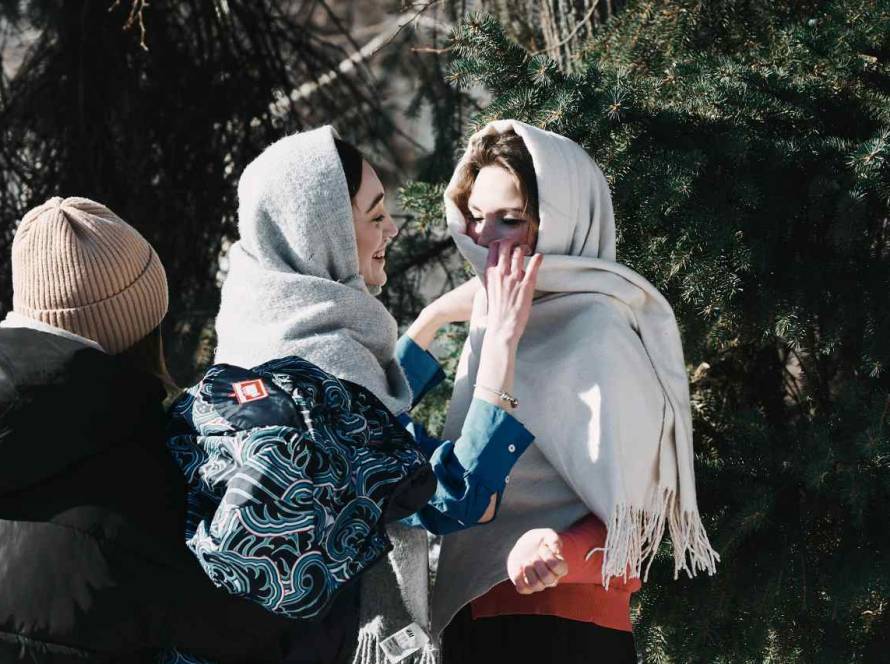
You’ve just moved into your new apartment in a vibrant Turkish neighborhood. Within the first five minutes of meeting your neighbor in the elevator, the conversation takes an unexpected turn. Instead of talking about the weather or the local commute, they’ve already asked if you’re married, why you don’t have children yet, and exactly how much you paid for those stylish shoes you’re wearing. To many Westerners, this feels like an intense interrogation or a breach of privacy. However, to understand the local social fabric, one must explore Why Turks Ask So Many Personal Questions, as this curiosity is rarely about judgment—it is the “Fast Track to Friendship” in Turkish culture.
The Philosophical Divide: Privacy vs. Connection
In many Western, individualistic cultures, privacy is a fortress that protects the self. It is a boundary that signals respect; by not asking personal questions, you are showing that you respect the other person’s autonomy. In Turkey, however, the cultural lens is shifted toward collectivism. Here, privacy can sometimes be perceived as “loneliness” or “isolation.”
When a Turk asks you a personal question, they are not trying to invade your space; they are trying to “place” you in their social universe. They want to know your story so they can find a hook—a way to relate to you, a way to offer help, or a shared experience that can bridge the gap between two strangers. In their eyes, knowing these details is the first step toward transforming you from a “foreigner” into a “neighbor” or even “family.”
The Deep Roots of “Samimiyet”
To truly grasp the Turkish psyche, we must discuss the untranslatable concept of samimiyet. This word is the cornerstone of almost every social interaction in the country. It translates roughly to “sincerity” or “intimacy,” but it encompasses much more. Samimiyet is the belief that to truly know and trust someone, there should be no artificial barriers.
Turks believe that openness fosters trust. By asking about your life, they are implicitly inviting you to ask about theirs. It is a social contract based on transparency. If someone knows your salary, your marital status, and where your parents are from, you are no longer a mystery; you are a known entity. This breaking down of the “stranger barrier” happens rapidly because, in a culture that values warmth over distance, there is no time to waste on superficial small talk.
The Community as a Social Safety Net
Historically, Turkish society—from the nomadic tribes of Central Asia to the close-knit Ottoman mahalles (neighborhoods)—has relied on the community as a survival mechanism. This legacy persists today. If a neighbor knows you are single and perhaps looking for a partner, or that you are currently unemployed, their first instinct isn’t to judge—it’s to mobilize.
Your “personal business” becomes a catalyst for community support. “My neighbor is a teacher and looking for a house,” they might tell their cousin, who just happens to have a vacant flat. Or, “My new friend is single,” might lead to an introduction to a suitable acquaintance. In this context, Why Turks Ask So Many Personal Questions becomes clear: your information is the currency they use to help integrate you into the local support system. They are essentially checking to see which “safety net” you need.
Breaking Down the “Big Three” Questions
While the questions may seem random, they usually follow a specific pattern designed to establish your social identity:
“Nerelisin?” (Where are you from?): This is perhaps the most important question in Turkey. It’s not just about a city; it’s about finding a connection. If you say you are from a certain country or town, they will immediately search their mental map for someone they know from there, a food they like from that region, or a historical fact. It’s an attempt to find common ground.
“Evli misin?” (Are you married?): In Turkey, family is the sun around which the social solar system rotates. Knowing your marital status helps them understand your lifestyle and your responsibilities. It’s often a lead-in to talking about their own family, creating a shared dialogue about domestic life.
“Ne iş yapıyorsun?” (What do you do for a living?): This isn’t necessarily about assessing your social status or wealth. It’s about understanding how you spend your day and what skills you possess. Again, it’s about utility—knowing what you do helps them know how they might interact with you in the future.
How to Navigate the Conversation Gracefully
For those unaccustomed to such directness, these questions can feel overwhelming. However, the key is to understand that while the questions are direct, the answers don’t always have to be. Turks are masters of “social perception” and can read between the lines.
If you are asked about your salary and feel uncomfortable giving a number, you don’t have to. A common and very Turkish response is, “Çok şükür, yetiyor” (Thank God, it’s enough). This phrase is a magic shield; it acknowledges the question politely, expresses gratitude for what you have, but keeps the specific data private.
Similarly, if asked why you don’t have children, a gentle “Kısmet” (It’s fate/destiny) is a perfectly acceptable answer that closes the topic without causing offense. Turks will respect your boundaries as long as the “tone” of your response remains friendly and warm.

The Sign of Being “Worth Knowing”
Ultimately, there is a hidden compliment in these “nosy” questions. In a culture as social as Turkey’s, silence is the ultimate sign of indifference. If no one asks you about your life, it means they aren’t interested in bringing you into their circle.
The next time you find yourself at a dinner table or a tea garden being peppered with questions about your personal life, try to see the warmth behind the curiosity. They aren’t judging your choices or auditing your bank account; they are trying to welcome you. They are saying, “I want to know you, I want to help you, and I want you to be part of my world.”
Conclusion: Embracing the Warmth
Living in or visiting Turkey requires a shift in perspective. Once you realize that the interrogation is actually an invitation, the discomfort begins to fade. By sharing small pieces of yourself, you gain access to a level of hospitality and community support that is rare in the modern, digital world.
So, the next time the man at the corner market asks how much rent you pay, don’t be afraid. Smile, give a general answer, and don’t hesitate to ask him a question in return! Ask about his children, his hometown, or how long he’s been in the neighborhood. You’ll find that in Turkey, a single personal question is often the start of a lifelong friendship.