Learning Turkish as a foreign language is not just about memorizing new vocabulary and grammar rules; it is opening a door to a vast, living, and highly dynamic culture. With its agglutinative structure and unique logic, Turkish may initially seem like a labyrinth to students. However, with the right resources, correct methods, and a rich variety of materials, this labyrinth turns into an enjoyable journey full of discovery.
So, what can a student benefit from to speed up their process, make it permanent, and, most importantly, enjoy this journey while learning Turkish? Here is a wide roadmap making a difference in modern language learning, extending from traditional methods to digital tools.
1. The Blessing of the Digital World: Language Applications and Interactive Platforms
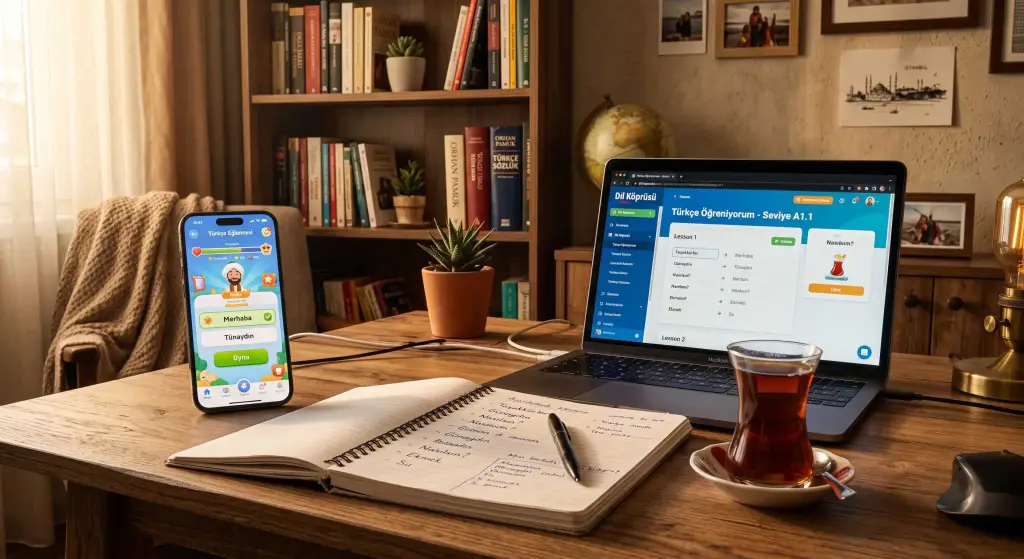
Today, language learning has moved beyond classroom walls and into our pockets. Especially for beginner-level students, mobile and web-based technologies are wonderful assistants for gaining a daily practice habit.
- For the Core Infrastructure: Gamified language learning applications are ideal for developing vocabulary and grasping basic sentence structures. Content operating with small rewards and a leveling-up logic keeps students’ motivation high.
- Interactive Worksheets: For students who get bored with just reading plain text, interactive digital worksheets are a great resource. These modern materials, where the student can match items, fill in the blanks, or trigger listening elements by clicking on the screen, turn passive learning into an active experience.
2. Natural Language Acquisition: Online Dictionaries and Digital Flashcards
When learning Turkish, instead of memorizing words one by one, it is essential to learn them within a context. At this point, students’ greatest friends are accurate dictionaries and memory techniques.
- Using Official and Reliable Dictionaries: For advanced students, the up-to-date online dictionaries of the official institutions to which the language is tied are the gold standard. Beginners, on the other hand, should prefer digital dictionaries that show the usage in a sentence and pronunciation, rather than just giving the direct equivalent of words.
- Permanent Memory with Spaced Repetition Cards: Students can benefit from smart study tools where they can create their own vocabulary cards. These software programs, working with the “Spaced Repetition System”, transfer words on the verge of being forgotten into long-term memory by reminding the student at the exact right time.
3. Cultural Icons and Storytelling
You cannot learn a language independently of its cultural codes. The best way to prevent students from drowning in grammar rules is to bring them together with familiar and interesting figures.
- Learning Through Cultural Heroes: Instead of giving a dry reading text to a beginner student; simplified texts appropriate to their level, containing the life stories of legendary musicians, unforgettable faces of cinema, or world-renowned artists who have a place in the heart of the country should be presented. The song lyrics or movie lines of these figures turn language learning from a mechanical process into an emotional bond.
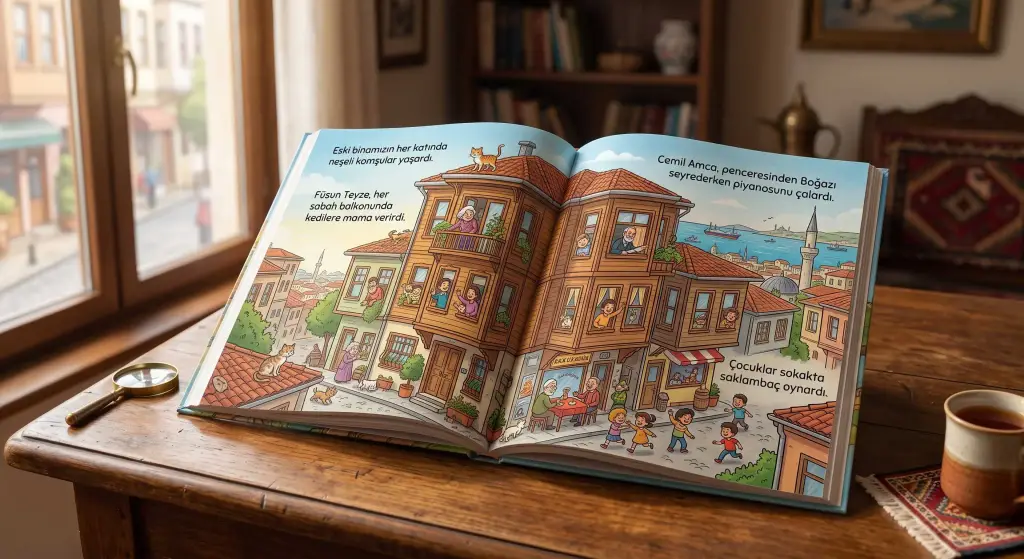
- Contextual Stories: Thematic story series, taking place in a specific apartment building and telling the daily adventures of the characters, allow students to learn adjectives, the present continuous tense, and daily spoken language through a sense of curiosity, without even realizing it.
4. From Ear to Heart: Turkish Music, Podcasts, and Audiobooks
In language learning, the higher the quality and intensity of the “Input”, the more naturally the “Output”, meaning the speaking skill, develops. Creating ear familiarity is the only way to catch that unique rhythm and emphasis of Turkish.
- Grammar with Song Lyrics: Turkish songs are like a treasure trove for language learners. Listening while following the song lyrics provides a wonderful involuntary learning experience regarding vowel harmony, personal suffixes, and pronunciation. Especially the works of old artists with clear and articulate diction are a perfect fit for the beginner level.
- Podcasts for Foreigners: In recent years, audio broadcast channels specially prepared for teaching Turkish to foreigners, spoken with a slow and clean diction, have become highly popular. Students can train their ears by listening to these broadcasts on the road, while cooking, or taking a walk.
5. The Most Effective Method: Language Immersion (Natural Exposure Method)
Traditional education systems prioritized grammar for a long time, but modern linguistics shows us that Language Immersion, meaning the method of completely exposing oneself to the language, yields much faster results. Even if the student does not live in the country where the target language is spoken, they can create their own “Turkish island” in the digital world.
- Changing Media Consumption: The student can switch the language of their phone, computer, and social media accounts to Turkish. Following the TV series and movies they watch with Turkish dubbing and Turkish subtitles is the shortest way to learn the idioms, exclamations, and daily reactions like “Yaa”, “Aynen”, “Hadi canım” in the spoken language.
- Social Media and Content Creators: Following qualified teachers and pages that produce Turkish content for foreigners on online platforms makes learning Turkish in micro-doses a part of life every day.
6. Fluent Speaking with Idioms and Proverbs
When the student reaches the intermediate level, just expressing their needs is no longer enough; they want to use the language more colorfully and naturally. The secret to speaking Turkish not like a “foreigner” but like a “native” lies in idioms.
- Stories Behind Idioms: Idioms in Turkish usually have very strong visual and historical origins. For instance, instead of making a student just memorize the meaning of an idiom, telling the cultural or historical story at its root increases the memorability of the words a hundredfold. The student who learns the cultural background starts not just to speak the language, but to feel it

7. Social Interaction and Online Support Groups
Language is a social tool and cannot be learned alone in a room by looking at books. Students need safe spaces where they will not be afraid of making mistakes, and where they can be in communication with their peers and guides.
- Instant Messaging Groups and Micro-Communities: Support groups shaped around specific themes and progressing in weekly modules are wonderful areas where regular daily practices are done and voice messages are shared. Such communities enable students to turn language learning into a routine. Receiving instant feedback and seeing that one is not alone keeps the motivation alive.
Conclusion: Plenty of Material, the Formula is Consistency
To sum up, today a Turkish student has a massive pool of materials at their disposal, ranging from artificial intelligence tools to interactive materials, cultural songs to original stories. The real secret here is not to depend on a single source.
The most successful formula is to strengthen the grammar infrastructure with interactive materials, nourish ear familiarity with music and audio broadcasts, and capture the soul of the language through cultural stories and idioms. It should not be forgotten that learning a language is not a matter of talent, but a matter of consistency built with the right materials.